Eye on the Cosmos: La Palma
Perched above the clouds at the Roque de los Muchachos Observatory, humanity gazes into the deepest, darkest corners of the universe.
At an altitude of 2,396 meters on the volcanic island of La Palma, you don't just look at the sky; you are submerged in it. The Roque de los Muchachos Observatory (ORM) is one of the premier astronomical sites on the planet.
Due to its geographical location and the thermal inversion layer created by the Atlantic trade winds, La Palma boasts some of the clearest, most stable nocturnal skies in the northern hemisphere. Here, the Milky Way doesn't just twinkle—it casts shadows. The sheer concentration of cutting-edge optical, infrared, and gamma-ray telescopes gathered on this single volcanic rim is a testament to humanity's insatiable drive to understand our origins.
The Gran Telescopio Canarias (GTC)
The crown jewel of the observatory is the Gran Telescopio Canarias (GTC). With a massive 10.4-meter segmented primary mirror, it is currently the world's largest single-aperture optical-infrared telescope. Walking inside the colossal silver dome feels like entering a futuristic cathedral dedicated to physics.
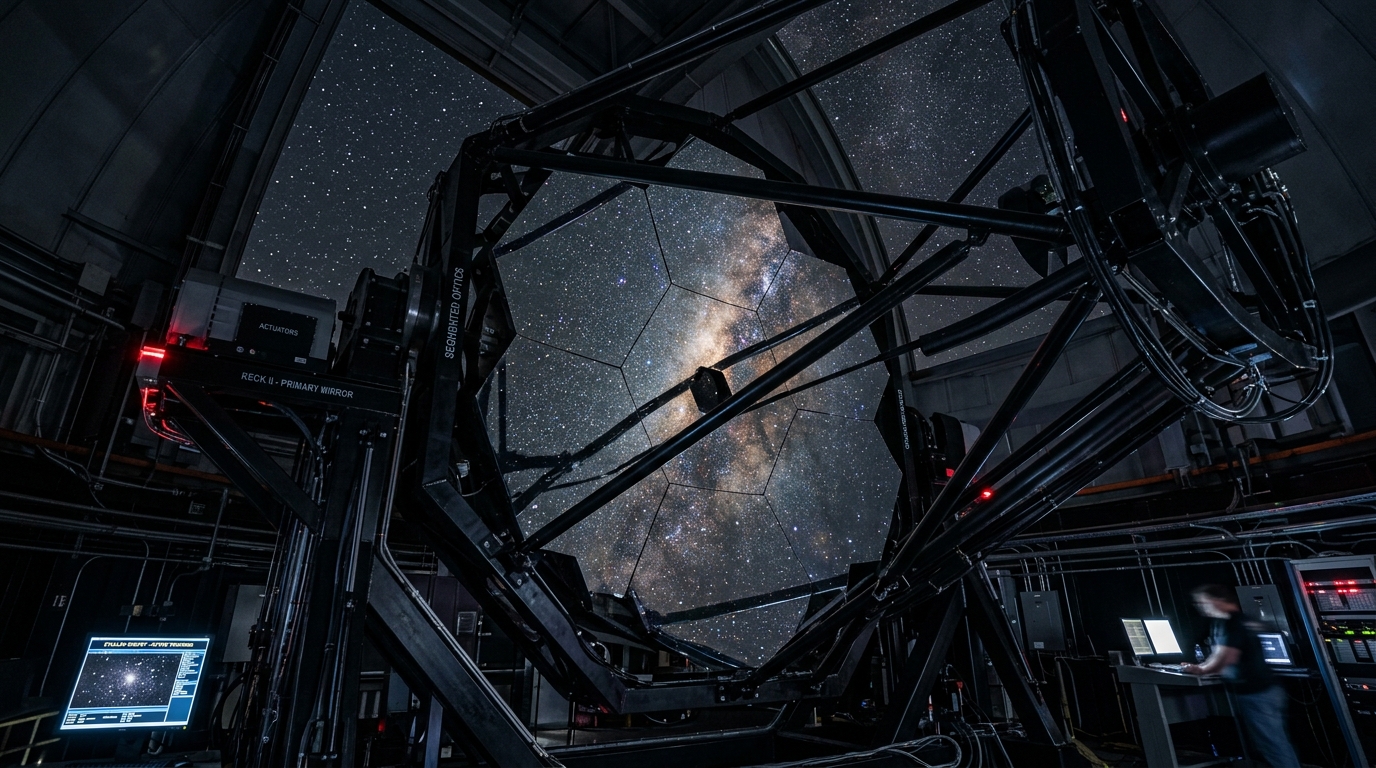
The mirror itself is composed of 36 hexagonal segments that act in perfect unison, continuously adjusting their shape to compensate for minute atmospheric distortions. This technology, known as active optics, allows astronomers to capture images of breathtaking clarity. The GTC has been instrumental in observing the faint light from the universe's most distant galaxies, peering back in time to mere hundreds of millions of years after the Big Bang.
Scientific Discoveries and Ongoing Missions
The ORM is a hub for groundbreaking scientific discoveries. Beyond optical astronomy, the site is famous for its MAGIC (Major Atmospheric Gamma Imaging Cherenkov) telescopes. These twin multi-mirrored dishes don't look at starlight; they detect the faint, bluish flashes of Cherenkov radiation created when high-energy gamma rays from deep space crash into Earth's atmosphere.
Through MAGIC and its successor, the CTA (Cherenkov Telescope Array) currently under construction, scientists are unraveling the mysteries of the most violent phenomena in the cosmos: supermassive black holes devouring stars, the chaotic aftermath of supernova explosions, and the enigmatic origins of dark matter.
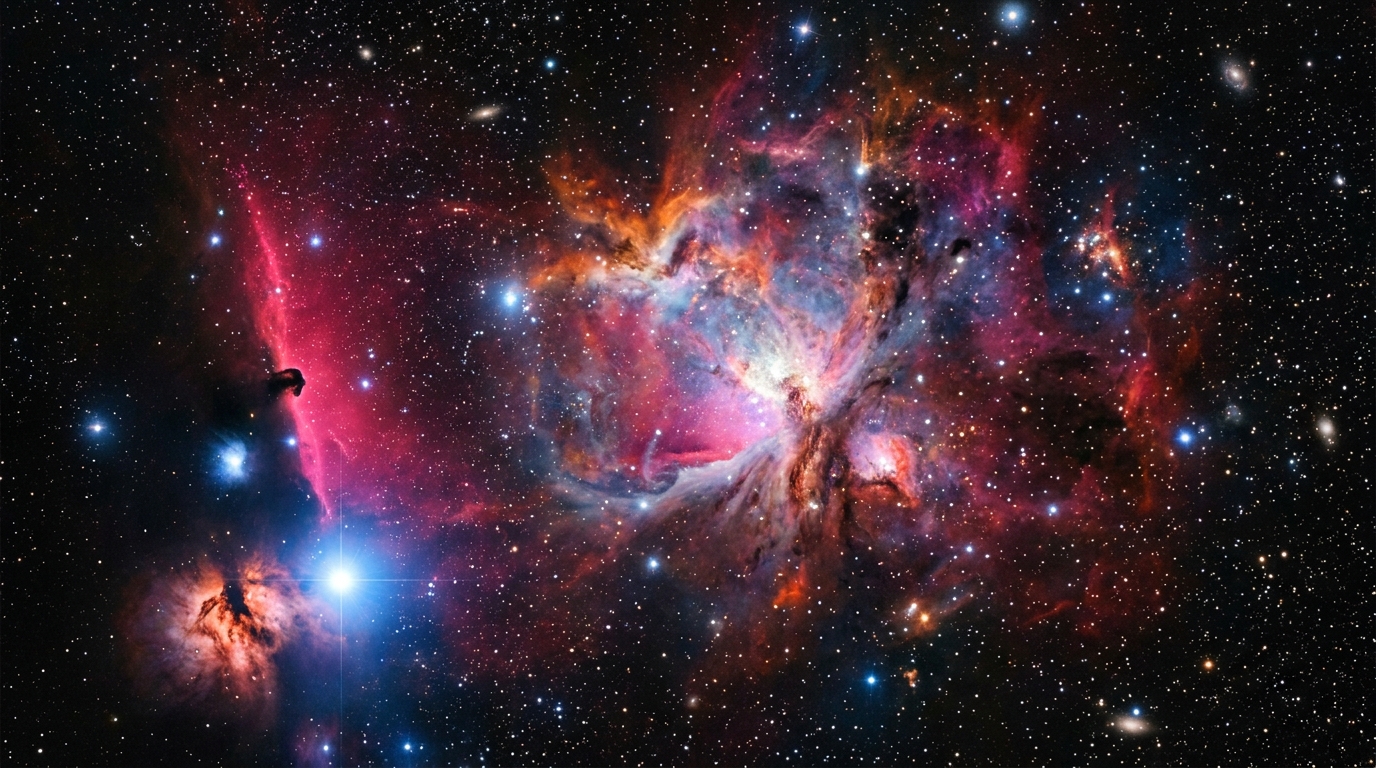
Ongoing missions at La Palma are heavily focused on exoplanet discovery. Instruments like HARPS-N (High Accuracy Radial velocity Planet Searcher for the Northern hemisphere) attached to the Telescopio Nazionale Galileo (TNG) are actively hunting for Earth-like planets orbiting distant suns. By measuring the microscopic "wobble" of a star caused by the gravitational tug of an orbiting planet, astronomers here have cataloged dozens of new worlds, inching us closer to answering whether we are truly alone in the universe.
Protecting the Dark
None of this would be possible without the strict "Sky Law" (Ley del Cielo) enforced by the Canary Islands government. This pioneering legislation regulates outdoor lighting, radio frequency usage, and even flight paths to ensure the pristine darkness above La Palma is never compromised.
Standing on the caldera's edge at 3 AM, surrounded by monumental optical machinery humming quietly as they track invisible targets across the zenith, one realizes the true importance of this place. The Roque de los Muchachos Observatory is a bridge between our pale blue dot and the infinite dark—a place where human curiosity continuously pushes back the boundaries of the unknown.